
On the Bible: Leviticus
Part III: Lessons from Leviticus

Part I: Freedom Is Not the Goal
Most readers approach Leviticus with impatience. Before the book is even opened, it feels restrictive—opposed to everything modern culture prizes: autonomy, self-expression, flexibility, and choice. We assume that fewer boundaries signal greater maturity and that freedom, once achieved, represents the highest good.
Leviticus challenges that assumption at its root.
The book enters the biblical story immediately after liberation. Israel has been freed from slavery. The chains are gone, and the external oppressor has been removed. Yet instead of unrestrained celebration, structure descends. Regulations multiply. Distinctions sharpen. Procedures are specified in detail.
The removal of constraint does not automatically produce strength. When external pressure disappears, whatever exists internally is revealed. If discipline has not been cultivated, impulse takes command. If character has not been formed, desire fills the vacuum. Freedom exposes what formation has—or has not—accomplished.
This pattern is recognizable beyond ancient history. When supervision fades, some people rise while others drift. When accountability loosens, standards either harden or soften. The absence of restriction does not create virtue; it reveals whether virtue was ever there.
Leviticus assumes that newly liberated people are not yet stable. Freedom removes chains but does not construct integrity. Without internal structure, the self disperses into appetite, distraction, and competing desires. The text responds not with affirmation but with formation.
Modern culture tends to equate restriction with oppression. Yet the deeper question is whether unrestricted living produces coherence. When every desire is granted equal authority, the self fractures under competing claims. When every option remains perpetually open, commitment weakens because nothing is chosen decisively enough to shape identity.
Structure is not the enemy of freedom. It is what prevents freedom from dissolving into chaos.
We possess more external freedom than any generation before us—less constrained by geography, inherited tradition, or communal expectation. Yet anxiety increases. Identity feels fragile. Commitment often feels burdensome. Liberation without formation proves unstable.
Leviticus begins where modern sensibility assumes the story should end. It insists that the fall of chains is not the completion of freedom but the beginning of responsibility. Structure must follow liberation, or liberation will erode what it was meant to secure.
Part II: Perimeter Defense
If freedom must be formed, it must also be guarded. Leviticus insists upon distinction with relentless clarity: clean and unclean, sacred and common, life and decay. These categories appear rigid to modern readers accustomed to blurring lines that earlier generations treated as necessary. Yet the text refuses that blurring because it understands something about human nature that we prefer to ignore: without boundaries, identity dissipates.
Every coherent identity depends upon exclusion as much as inclusion. To define what belongs within the perimeter of one’s life is to protect what gives that life integrity. A person who refuses to distinguish between what strengthens and what weakens him does not become expansive; he becomes scattered. What is permitted without scrutiny gradually reshapes the one who permits it.
The distinctions in Leviticus function as moral training. They require attentiveness. Is this life-giving or corrosive? Does this elevate or degrade? Repeating that discernment forms character because it interrupts impulse and demands deliberation.
Human beings do not drift evenly between growth and decay. We are inclined toward what is immediately gratifying because it demands little resistance. Compromise often appears more comfortable than confrontation. Over time, erosion becomes normalized. What was once resisted becomes tolerated; what was tolerated becomes defended.
Leviticus embeds discipline into daily life so vigilance does not depend upon mood. It assumes that without conscious separation from what corrodes, corrosion will prevail. To draw a line is to acknowledge that some influences are incompatible with who one intends to become. Without such lines, intention collapses into impulse.
Holiness, in this sense, is not moral exhibitionism but disciplined differentiation. It is clarity about what must remain protected if coherence is to survive. The categories may be ancient, but the principle endures: what you allow without resistance will eventually shape you.
Part III: Sacrifice and the Cost of Ascent
The book’s insistence on sacrifice often unsettles modern readers. Animals are selected, inspected, and surrendered; blood is shed. It is easy to dismiss these rituals as relics of primitive religion. Such dismissal overlooks the deeper claim embedded in the practice.
Sacrifice is not about divine appetite. It is about moral gravity.
Leviticus rejects the assumption that disorder is weightless. Misalignment creates distance, and distance cannot be repaired by sentiment alone. Something must be relinquished. Something must be surrendered. The ritual externalizes a truth we resist: growth requires loss.
Every serious transformation confirms this. To become disciplined requires relinquishing indulgence. To become trustworthy demands surrendering convenience. To become strong necessitates foregoing comfort. No ascent occurs without subtraction. What is sacrificed clarifies what stands above us.
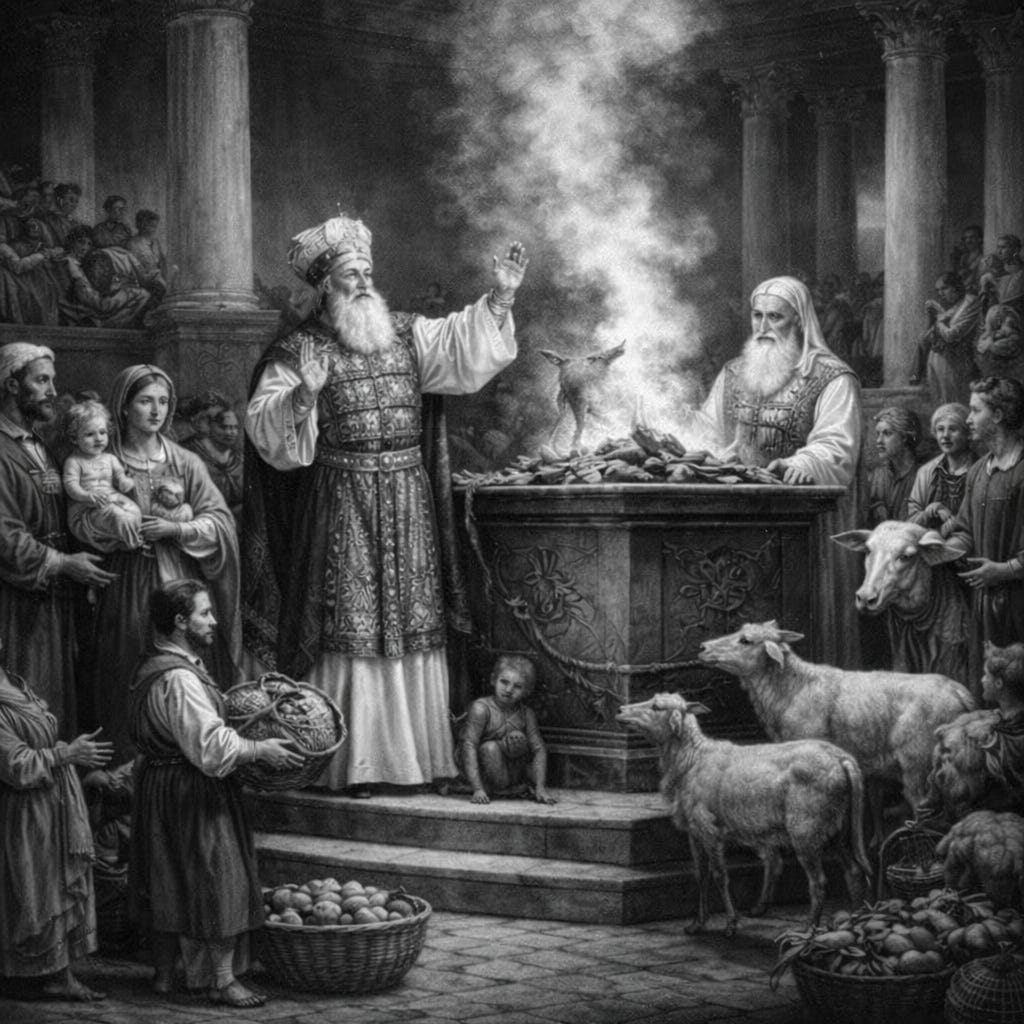
Modern culture celebrates ambition but softens sacrifice. We are encouraged to believe that we can add without subtracting, accumulate without relinquishing, and evolve without renouncing anything that once defined us. Yet every commitment excludes alternatives. To choose one path is to foreclose countless others. Sacrifice is not optional; it is inherent in decision itself.
Leviticus renders this cost visible so that hierarchy becomes unmistakable. When something of value is surrendered, the structure of allegiance is revealed. Everyone lives sacrificially, whether consciously or not. If one refuses to sacrifice for what is highest, one will inevitably sacrifice it for what is immediate.
What is not consciously relinquished in pursuit of the greater will quietly govern from below.
Part IV: Ritual and the Formation of Identity
Sacrifice, if isolated, becomes memory. To shape identity, it must be repeated. Leviticus, therefore, embeds sacrifice within rhythm—daily offerings, seasonal observances, precise procedures. These details are not excess; they are a structure applied to time.
Human beings do not remain aligned with their highest values through intensity alone. Conviction fluctuates. Emotion fades. Resolutions weaken. Identity entrusted solely to feeling becomes unstable because feeling itself is unstable.
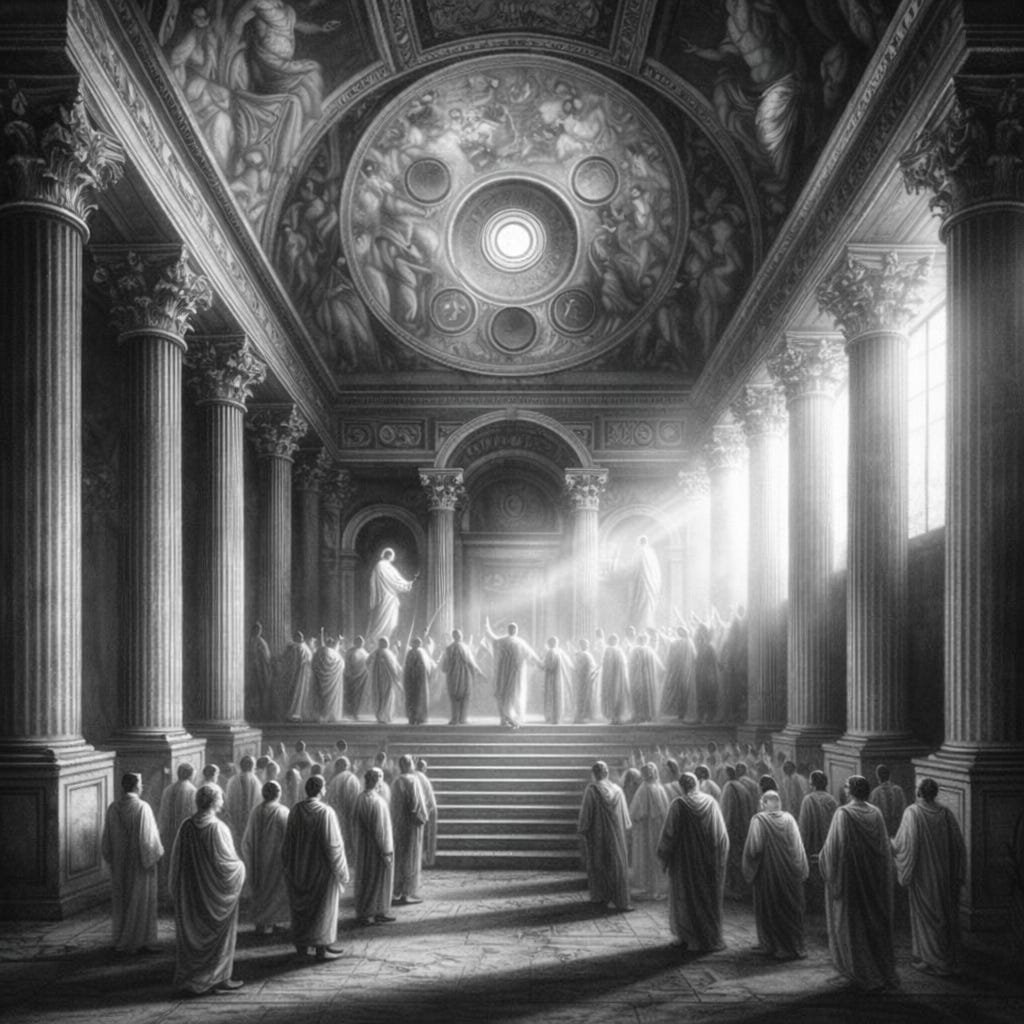
Ritual addresses that instability. It institutionalizes what matters so that alignment does not depend upon mood. What is not deliberately reinforced gradually erodes. The habits repeated quietly shape a life more reliably than the moments that felt profound. What is scheduled reveals what is served. What remains optional drifts toward the margins.
Ritual is not empty repetition; it is the architecture of memory. It keeps what is ultimate embodied in action rather than suspended in abstraction. Without rhythm, even sincere commitments thin over time.
Leviticus recognizes that seriousness must be structured if it is to endure.
Part V: The Cost of Casualness
The account of Nadab and Abihu interrupts the rhythm of ritual with severity. They approach with unauthorized fire and are consumed by it. The narrative offers no extended explanation and no mitigation. It simply presents consequence.
The episode unsettles because it confronts a habit we carry quietly: the assumption that what is sacred will accommodate our preferences. The issue is not merely technical violation but presumption—approaching what is ultimate on one’s own terms.
We often treat our highest commitments as negotiable. Truth becomes selective. Vows become flexible. Reverence becomes optional. The erosion is rarely dramatic. It unfolds gradually, through small concessions that dull what once felt weighty.
The story dramatizes a warning: not every reality can be approached casually. Some realities demand alignment precisely because they are not subject to personal reinterpretation. Severity here is not spectacle but protection. To treat what is ultimate as common is to distort oneself in the process.
Part VI: Holiness, Drift, and the Fixed Center
All of these strands converge in the central command of Leviticus: be holy.
Holiness means to be set apart—to be ordered around something higher than appetite or preference. Boundaries guard identity. Sacrifice establishes hierarchy. Ritual stabilizes alignment. Severity protects reverence. Together, they sustain proximity to what is ultimate without fragmentation.
Modern moral instinct resists such separation. We associate restriction with oppression and view strong distinctions with suspicion. Comfort becomes the assumed good; non-judgment the assumed virtue. Yet when nothing is treated as inviolable, identity becomes provisional. What once anchored the self becomes negotiable.
We have gained extraordinary freedom in the modern world, but freedom alone does not generate weight. Commitments shorten. Meaning feels increasingly fragile. Anxiety rises in a culture that insists it has liberated itself from constraint. The absence of structure does not ensure strength; more often, it produces drift.
Leviticus assumes that human beings do not remain oriented by accident. It constructs containment around what matters because it expects erosion. The question it presses is not whether ancient ritual can be replicated in contemporary form, but whether a life without a fixed center can endure sustained pressure.
Every life is organized around something. If not sacred law, then status. If not reverence, then appetite. If not devotion, then distraction. The absence of declared hierarchy does not eliminate hierarchy; it merely disguises it.
Habits disclose what we truly serve. Sacrifices reveal what we truly value. Rituals—formal or informal—expose what we treat as ultimate.
A center that shifts with circumstance cannot bear sustained weight. When strain comes, what was never fixed cannot hold. If nothing in a life is protected at all costs, nothing will anchor it when tested.
Leviticus does not offer comfort. It offers structure. It assumes drift and answers it with discipline. It assumes that proximity to what is sacred requires seriousness.
The question, then, is not whether the book feels severe to modern sensibilities. The more penetrating question is whether a life built without structure, sacrifice, and guarded reverence can sustain meaning at all.